

Birthstone Bracelet Ideas: Which Stones Last and How to Choose

The best birthstone bracelet ideas are a single-stone station bracelet for one birthday, a slim line bracelet that repeats one birthstone all the way around, a family bracelet that combines the birthstones of each child, and a pearl or diamond bracelet for June and April birthdays. Because a bracelet takes more knocks than a necklace, the right choice also depends on the stone: rubies, sapphires, diamonds and topaz handle daily wear easily, while pearls and opals need a gentler life.
Below you will find which birthstones truly last on the wrist, a month-by-month guide with real pieces, how to size a bracelet for a gift, and how to design a birthstone bracelet for mom that still looks refined years from now.
What is a birthstone bracelet?
A birthstone bracelet is a bracelet set with the gemstone associated with a birth month, either the wearer's own or the birthstones of the people she loves. The modern American list most jewelers use today dates back to 1912, when the national association of jewelers standardized it, with a few additions since. You can see every month, color and meaning in our birthstone chart by month.
Birthstone bracelets come in five main styles:
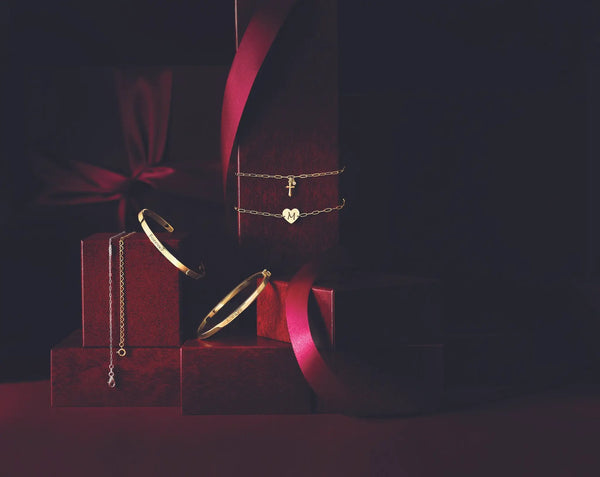
- Station bracelets: a fine chain with stones spaced along it. Light, easy to stack and the most versatile everyday choice.
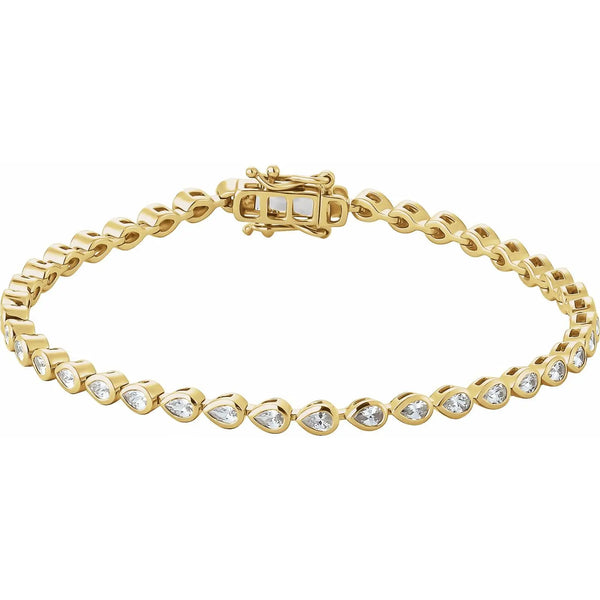
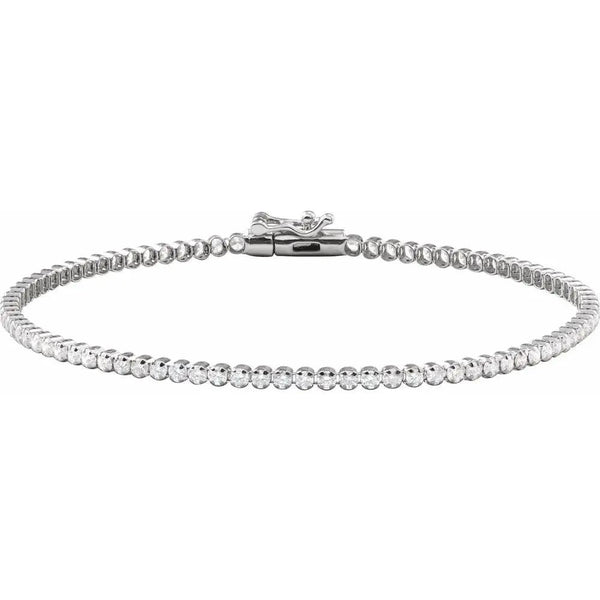
- Line or tennis bracelets: a continuous row of stones, often alternating with diamonds. More presence, more sparkle.
- Family or mother's bracelets: several different birthstones, one for each child or family member.
- Charm bracelets: a birthstone charm added to a chain or charm bracelet, easy to add to over the years.
- Bead and strand bracelets: pearls or gemstone beads strung together, softer and more casual.

Which birthstones are durable enough for a bracelet?
This is what most birthstone gift guides leave out. Hands and wrists brush against desks, car doors and countertops all day, so hardness matters more on a bracelet than on earrings or a pendant. Gem hardness is measured on the Mohs scale, from 1 (softest) to 10 (diamond). As a rule of thumb, stones of 7 and above are comfortable for daily bracelet wear; softer stones are better in protective settings or saved for occasions.
| Month | Birthstone | Mohs hardness | Everyday bracelet? |
|---|---|---|---|
| January | Garnet | 6.5 to 7.5 | Yes, with reasonable care |
| February | Amethyst | 7 | Yes; keep out of strong sun for long periods |
| March | Aquamarine | 7.5 to 8 | Yes |
| April | Diamond | 10 | Excellent |
| May | Emerald | 7.5 to 8 | Yes, but avoid hard knocks; natural emeralds are often included |
| June | Pearl, moonstone, alexandrite | Pearl 2.5 to 4.5; moonstone 6 to 6.5; alexandrite 8.5 | Pearl and moonstone: gentle wear only |
| July | Ruby | 9 | Excellent |
| August | Peridot | 6.5 to 7 | Yes, with care |
| September | Sapphire | 9 | Excellent |
| October | Opal, tourmaline | Opal 5.5 to 6.5; tourmaline 7 to 7.5 | Tourmaline yes; opal for occasions |
| November | Topaz, citrine | Topaz 8; citrine 7 | Yes |
| December | Blue topaz, tanzanite, turquoise, zircon | Topaz 8; tanzanite 6 to 6.5; turquoise 5 to 6 | Blue topaz yes; tanzanite and turquoise with care |
So which is the weakest birthstone? Pearl, by a wide margin, followed by turquoise and opal. That does not rule them out; it means a pearl bracelet should be the last thing you put on and the first thing you take off, and kept away from perfume and lotion. If you love a June or October birthday but want something for every day, alexandrite or pink tourmaline are the durable alternatives.
Birthstone bracelet ideas by month
Here is how we would choose for each birthday, using pieces from the Maison's collection where they exist:
- January, garnet: the Nicole Garnet Station Bracelet in 14K gold, deep wine red stations on a fine chain. Our garnet birthstone guide covers its colors and meaning.
- February, amethyst: the Claire Amethyst Station Bracelet, violet against yellow gold.
- April, diamond: the Duchesse Diamond Five-Stone Line Bracelet, five bezel-set diamonds that wear like a whisper of a tennis bracelet.
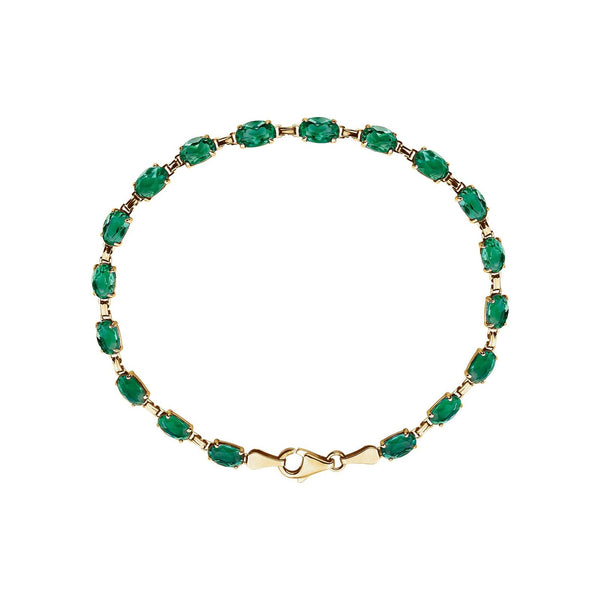
- May, emerald: the Valse Emerald and Diamond Line Bracelet, alternating green and white, offered with lab-grown or natural emeralds.
- August, peridot: the Éclat Peridot Station Bracelet, bright green stones alternating with polished gold beads.
- September, sapphire: the Lumière Blue Sapphire and Diamond Line Bracelet, one of the most durable everyday birthstone bracelets you can give.
- November, citrine: the Délice Citrine Station Bracelet, warm golden stones that suit every skin tone.
- December, blue topaz: the Provence Blue Topaz Station Bracelet, icy blue and ready for a December birthday or the holidays.
For March, June, July and October, the line and pearl styles in our bracelets collection cover rubies and pearls, and a Client Advisor can arrange an aquamarine, opal or tourmaline version of a station or line bracelet on request through a private appointment.

How do you choose a birthstone bracelet for mom?
Mother's birthstone bracelets are among the most searched gifts of the year, and they are easy to get wrong. A few principles keep them elegant:
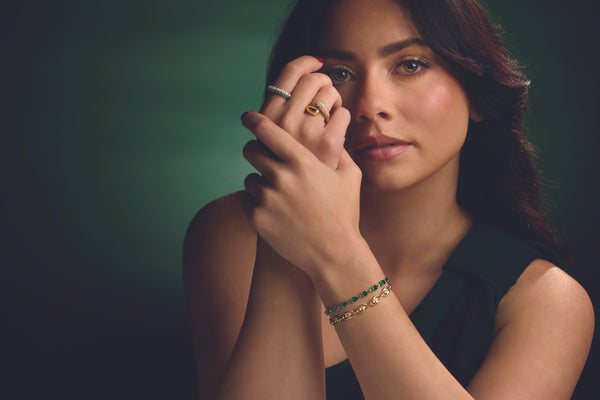
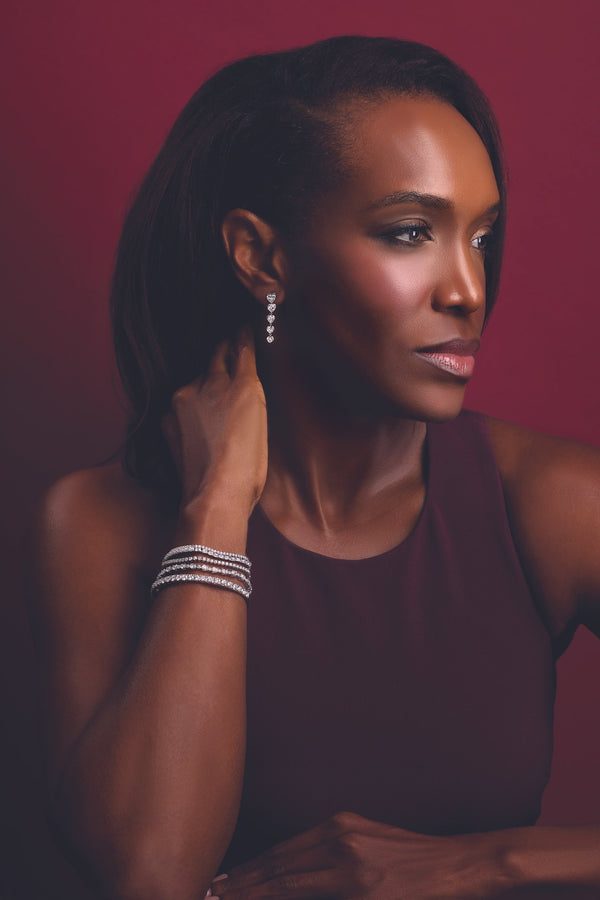
- Decide between one bracelet or a stack. With two or three children, one bracelet per child, worn together, often looks more refined than many colors on one chain, and each piece can be worn alone. Three station bracelets in 14K gold stack beautifully because they share the same chain and scale.
- Order stones by birth order. On a multi-stone design, place the eldest child's stone closest to the clasp on the left and continue to the right; it is the convention most families recognize.
- Balance the colors. Garnet, ruby and amethyst together read as one warm family; adding a single diamond or white stone between colored stones calms a busy mix.
- Choose the metal she already wears. Look at her wedding band or her watch. A yellow gold bracelet beside a white gold watch can work, but it should be a choice, not an accident.
- Think about her day. A mother of young children needs a secure clasp and durable stones; a pearl bracelet is better for evenings.
For more ideas for her, see our Christmas jewelry gifts for mom.
"For a first birthstone bracelet I would choose a fine station bracelet in solid gold over a heavy multi-stone design. It is light enough to wear every day, it stacks with a watch, and when the family grows you simply add a second one." — Héloïse Beucher
What size birthstone bracelet should you buy?
Most women's bracelets are 7 inches long, which fits a wrist of about 6 to 6.5 inches. To be precise, wrap a strip of paper snugly around the wrist bone, mark it, measure it flat, then add about 1/2 inch for a line or tennis bracelet and 3/4 to 1 inch for a chain or station bracelet. Our station bracelets measure 7.25 inches with an extender, and our line bracelets 7 1/4 inches. For a gift, borrow a bracelet she already wears and measure it end to end. Our tennis bracelet size guide has a full chart.

Lab-grown or natural birthstones?
Lab-grown rubies, sapphires and emeralds have the same chemical composition and hardness as natural stones; they differ in origin and price. A lab-grown stone gives a cleaner, more saturated color for the budget, while a natural stone carries rarity. Several of our line bracelets are offered in both, so the choice can follow the recipient's preference. Whatever you choose, the description should state it clearly; if it does not, ask.
How much does a real birthstone bracelet cost?
In solid gold, expect roughly a few hundred dollars for a fine station bracelet with small stones, around $800 to $1,200 for a slim line bracelet of gemstones and diamonds, and $1,500 and up for a fuller ruby, sapphire or emerald tennis bracelet. Prices well below that usually mean plated metal, glass or simulants, which fade or scratch quickly on the wrist.
How to care for a birthstone bracelet
- Put it on after perfume, lotion and hairspray, and take it off for the gym, the pool and household cleaning.
- Clean with lukewarm water, a drop of mild soap and a soft brush, then dry with a lint-free cloth. Skip ultrasonic cleaners for emerald, opal, pearl, peridot and turquoise.
- Store it flat and separately so harder stones do not scratch softer ones.
- Have clasps and settings checked once a year if you wear it daily.
Our guide on how to clean fine jewelry at home goes stone by stone.
Pieces to discover
Frequently asked questions
Which wrist do you wear a birthstone bracelet on?
Either. Most people wear it on the wrist opposite their watch, or stacked with the watch on the non-dominant hand where it takes fewer knocks. The same applies to protective pieces; our guide to evil eye bracelet meaning covers the traditions about which wrist to choose.
Can you wear a birthstone bracelet every day?
Yes, if the stone is durable (7 or higher on the Mohs scale) and the bracelet is solid gold with a secure clasp. Pearls, opals and turquoise are better for occasional wear.
Can a man wear a birthstone bracelet?
Absolutely. Sapphire, ruby, garnet and blue topaz in a slim gold line or station design suit men well, especially worn with a watch.
How many birthstones can go on one bracelet?
Two to five stones look balanced on a family bracelet. Beyond five, consider two bracelets worn together instead.
Is a birthstone bracelet a good Christmas gift?
Yes. It is personal without being a guess about her style, and for a December birthday blue topaz doubles as a holiday gift. Order early enough for sizing questions.
The takeaway
A great birthstone bracelet starts with the right stone for daily life, a style that suits her wrist and a size measured, not guessed. Choose solid gold, keep the design simple, and let the color carry the meaning. Every Maison bracelet is inspected before it ships, delivered fully insured and presented in our signature gift box. Explore the bracelets collection or our Christmas gifts to find hers.
Join the Maison's list and enjoy 15% off your first order. Sign up